
For B2B SaaS and tech companies, the real challenge isn’t building products—it’s reaching the right audience at the right time.
The 95‑5‑1 Rule of GTM helps you do just that by aligning strategies with buyer readiness. RevOps fuels this by connecting growth data from Marketing, Product, Revenue, CRM teams and powers it with shared goals.
What Is the 95-5-1 Rule of GTM?
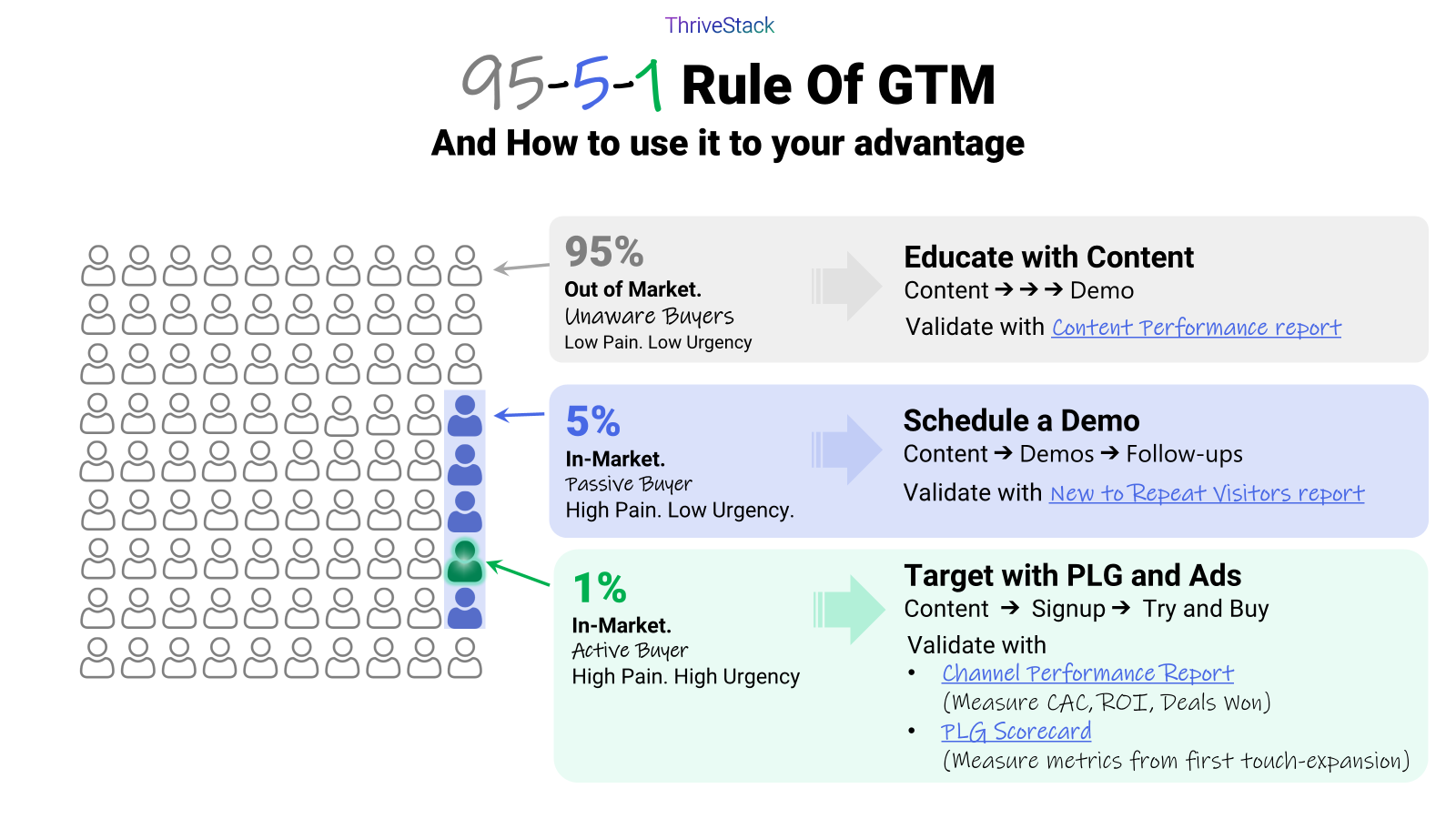
The 95-5 rule segments your total addressable audience into three behavioural buckets based on buyer readiness framework and intent:
- 95% — Out of Market
Prospects with low awareness, low urgency, and low buying intent. - 5% — In Market (Passive Buyer)
Prospects who are becoming aware of their need, but are not actively buying yet. - 1% — In Market (Active Buyer)
Prospects with high pain points and high urgency—ready to purchase.
The rule highlights one key truth:
➡️ Only about 1% of your audience is actively ready to buy at any given time.
So rather than focusing all your efforts on that tiny ROI window, this framework helps you design different tactics for each segment—ensuring that your marketing and sales investments actually move prospects forward.
Segment 1: The 95% — Educate with Content
Most of your total audience falls into this category—they are out-of-market buyers and not actively looking to purchase.
These buyers:
- Don’t yet understand the problem your product solves
- Have low urgency or motivation
- Are researching, browsing, or learning
Goal
Educate, build awareness, and influence early-stage B2B buyer intent.
How to Engage Them
✔ Create educational content addressing industry challenges
✔ Publish thought leadership, guides, blogs, and social content
✔ Use awareness content before introducing product capabilities
Conversion Path
Content → Awareness → Schedule a Demo
How to Validate Success
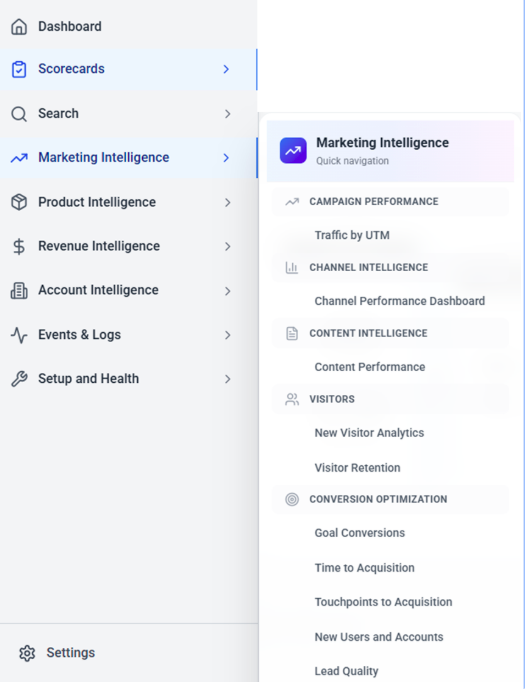
Use Content Performance Reports to measure:
- Page views and engagement
- Time spent
- Topic interest
- Content-to-demo conversion rates
This shows how effectively your GTM content strategy is moving buyers through the top of the SaaS marketing funnel.
Segment 2: The 5% — Target with Schedule a Demo
Now we’re getting into prospects who are aware, somewhat interested, and could become buyers soon.
This group is defined as:
- Passive buyers
- Higher pain points than the 95% group
- Low urgency but open to solution discussion
Goal
Convert interest into meaningful sales conversations.
How to Engage Them
✔ Provide mid‑to‑bottom‑of‑funnel content
✔ Case studies, webinars, demos
✔ Follow‑ups based on behaviour (e.g., demo signups, repeat site visits)
Conversion Path
Content → Schedule a Demo → Follow-Ups
How to Validate Success
Check your New to Repeat Visitors Report:
- Are prospects returning?
- Are they requesting demos?
- Are they engaging with product pages?
This indicates whether interest is increasing or remaining stable.
Segment 3: The 1% — Target with PLG & Ads
This is your high‑urgency, high‑intent audience — the ones most likely to convert.
They are:
- Actively in market
- Experiencing high pain
- Motivated to solve the problem now
Goal
Drive them quickly through the conversion funnel.
How to Engage Them
✔ Use product‑led growth (PLG) strategies
✔ Leverage targeted ads and remarketing
✔ Encourage signups, trials, and straightforward conversions
Conversion Path
Content → Signup → Try & Buy
How to Validate Success
Measure using:
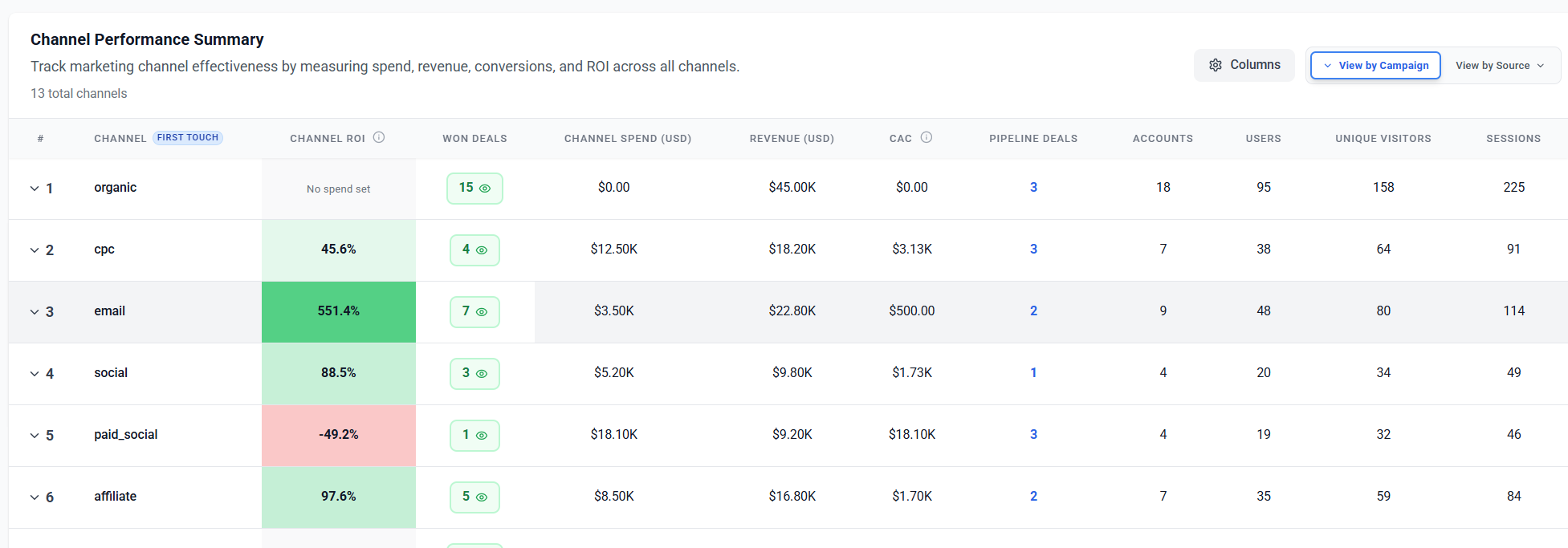
Channel Performance Report
Track CAC, ROI, and deals won.
PLG Scorecard
Track behavior metrics like:
- Trial activations
- Feature usage
- Expansion opportunities
This helps you see how quickly users go from first touch to paid conversion.
How to Use This Rule to Your Advantage
The 95‑5―1 Rule of GTM teaches marketers and GTM leaders:
👉 Not all audiences should be marketed to the same way.
👉 Different segments require different touchpoints and strategies.
👉 Your product will sell faster when you meet prospects where they are.
Instead of using one messaging strategy for everyone, align your content, sales motions, and analytics to the buyer’s stage.
By doing this, you’ll find:
- Higher engagement
- Better pipeline velocity
- Improved conversion rates
Bring It All Together
Here’s what your GTM engine looks like using this rule:
Conclusion: Focus Where It Counts
The 95-5-1 Rule of GTM helps you avoid wasting resources on unqualified audiences while providing each group with tailored messaging and tactics they need to convert.
When you tailor your approach based on buyer awareness and intent, you:
✅ Increase conversions
✅ Reduce churn
✅ Boost long‑term growth
If you adopt this approach today, your GTM strategy won’t just reach more prospects—it will reach the right ones.